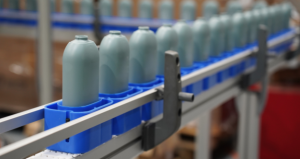

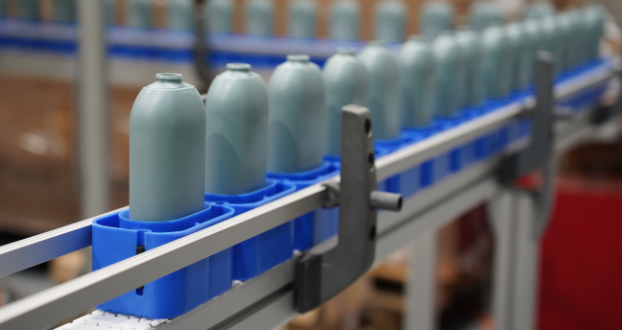
Selecting industrial filling machinery for hair care products presents a distinct fluid-handling challenge. Formulations range from free-flowing shampoos to high-viscosity, non-conductive conditioners, shear-sensitive hair masks, and foamy body washes.
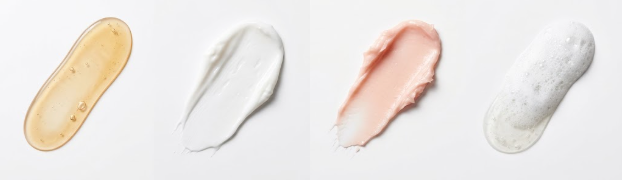
Handling these products across multiple bottle formats demands precise engineering. Viscosity swings, thixotropy, foaming dynamics, electrical conductivity, and container geometry dictate how a product behaves under pressure and speed. Miscalculating these parameters leads directly to line stoppages, extensive product giveaway, bottle deformation, and excessive cleaning downtime.
This guide analyzes how to evaluate hair care filling systems based on fluid behavior, compares the primary dosing technologies, and details why integrated filling and capping platforms maximize line efficiency.
Why Hair Care products demand dedicated filling approaches
Personal care formulations rarely behave like standard liquids. In hair care manufacturing, fluid mechanics vary significantly from one formulation batch to the next:
- Shampoos: Flow properties range from low to medium-high viscosity. Their primary packaging challenge is aeration and foaming during high-speed bottom-up or subsurface filling, which can distort fill levels and contaminate bottle finishes.
- Conditioners and Hair Masks: These dense emulsions exhibit shear-thinning (thixotropic) behavior: viscosity drops under pumping shear and rises immediately once inside the container. Furthermore, conditioners frequently contain cationic surfactants, silicones, and oils, rendering them electrically non-conductive.
- Body Washes and Shower Gels: Formulations frequently exhibit high surface tension and stringing at the nozzle tip, demanding precise cut-off control to prevent product dripping on container necks.
- Lotions and Cosmetic Creams: Creams and waxes require gentle product paths that maintain emulsion stability and prevent phase separation during dosing.
Container geometry adds another layer of complexity. Modern personal care lines handle flexible, custom-molded oval bottles, narrow-neck containers, and unstable geometries that tip easily at high transfer speeds. A reliable machine must adapt fluid dynamics and container handling simultaneously.
Technical factors to evaluate in a Hair Care Filling Machine
Defining precise operational parameters prior to equipment specification prevents costly line modifications downstream.
Rheology, Shear Sensitivity, and Conductivity
- Dynamic viscosity range (cP) under ambient and filling temperatures.
- Shear sensitivity (will high-shear pumping alter product texture or stability?).
- Foaming tendency and de-aeration time.
- Electrical conductivity, which determines whether electromagnetic metering is technically viable.
Filling accuracy and product giveaway
Volumetric drift translates directly into lost margin. On high-speed lines running tens of millions of units annually, saving just 1 gram per bottle preserves dozens of metric tons of bulk product each year.
Evaluate machine accuracy under dynamic plant conditions (such as pressure fluctuations from bulk supply tanks or batch viscosity shifts), rather than static factory acceptance tests.
Real-World Line Efficiency (OEE) vs. Nameplate Speed
Nameplate dosing speed is secondary to process stability. High-speed dosing is counterproductive if erratic bottle handling, nozzle dripping, or downstream capping faults trigger continuous line stops.
Target an architecture that protects Overall Equipment Effectiveness (OEE) through smooth container control, zero-splash filling, and synchronized machine pitch.
Cleaning, hygiene and fast product changeovers
Cross-contamination risks between product families demand clean-in-place (CIP) and sterilization-in-place (SIP) designs with minimal dead legs, automated cycle tracking, and self-draining product circuits.
For plants running short production campaigns across various SKUs, evaluate:
- Tool-less changeovers for pucks, starwheels, and capping chucks.
- Automated recipe management through the HMI (storing filling profiles, nozzle stroke depths, and torque targets).
- ATEX compliance if formulations include volatile components, hydroalcoholic bases, or aerosol propellants.
Comparing Filling Technologies for Personal Care
Selecting a dosing principle depends on fluid properties, target accuracy, and production versatility.
| Technology | Operating Principle | Best Suited For | Key Limitations |
| Mass Flowmeter (Mass flow) | Coriolis effect (direct mass and density measurement) | Conductive & non-conductive fluids, conditioners, emulsions | Higher initial capital investment |
| Magnetic Flowmeter (Mag Flow) | Faraday’s law of induction (conductive fluid velocity) | Water-based shampoos, body washes with conductivity > 5 µS/cm | Unsuitable for non-conductive conditioners, oils, or silicones |
| Piston / Volumetric | Mechanical displacement via cylinder and piston stroke | Uniform, viscous pastes and heavy creams on dedicated single SKUs | Labor-intensive cleaning (CIP limitations), mechanical wear |
Coriolis Mass Flowmeters
Mass flow technology measures the actual mass of the liquid passing through the dosing valve, independent of temperature, pressure, or density variations.
Advantages: Unaffected by viscosity fluctuations; compatible with both conductive and non-conductive products (essential for silicone-rich conditioners); minimal moving parts in contact with product; high dosing accuracy with near-zero giveaway.
Application: Ideal for flexible contract packers and personal care brand owners running wide formulation portfolios on a single line.
Magnetic Flowmeters (Inductive Flow)
Magnetic flowmeters measure the velocity of conductive liquids as they pass through an induced magnetic field.
Advantages: Highly cost-effective and accurate for water-based personal care products. Eliminates moving mechanical parts from the fluid path, simplifying CIP cycles.
Limitations: The product must exhibit an electrical conductivity typically above 5 to 20 µS/cm. Non-conductive hair conditioners, pure oils, and certain styling waxes cannot be dosed with this technology.
Piston-based filling systems
Piston fillers deliver a fixed volume using mechanical displacement strokes.
Advantages: Well-proven mechanical technology capable of generating high suction pressures for dense pastes.
Limitations: Pistons contain dynamic seals, valves, and moving surfaces that suffer wear over time, leading to volume drift. Cleaning requires extensive flushing or complete disassembly, significantly lengthening product changeover times compared to flowmeter systems.
Why Filling and Capping Integration Matters
Evaluating a filler in isolation overlooks the primary cause of line downtime: container transitions. Transporting open, full containers over intermediate conveyors between stand-alone fillers and cappers introduces sloshing, container tipping, and neck contamination.
Eliminating Product Sloshing and Line Jams
A monoblock platform unifies filling and capping around a single pitch and control system. Containers transfer positively from the filling carousel to the capping turret via precision starwheels or puck systems, eliminating open-bottle conveyor transit entirely.
Managing Complex Closures
Hair care packaging relies heavily on specialized dispensing closures: lotion pumps, directional flip-top caps, trigger sprays, and asymmetrical screw caps.
An integrated monoblock coordinates bottle positioning with mechanical cap orientation systems, verifying torque application and closure seating immediately after dosing.
Real-World Examples: How Mengibar Optimises Hair Care Filling Lines
Mengibar engineers packaging lines designed specifically for complex personal care fluid dynamics and aggressive changeover schedules:
Filling and Capping monoblock for Hair Care
This compact solution combines 9 mass flowmeter filling stations with 4 capping stations, delivering a 98% OEE and saving 10 tonnes of product annually.
Filling and Capping monoblock for Hair & Body Care
Featuring Smartflow technology, an integrated CIP system and tool-free changeovers, this solution combines filling consistency, simplified cleaning and greater production flexibility in a compact monoblock.
What to ask before investing in a Hair Care Filling Line
Before selecting a supplier, make sure the proposed machine has been evaluated against your actual products, containers and production conditions. Use the following questions to guide the technical assessment:
- Rheology Testing: Has the supplier tested dosing accuracy on your actual production batches, specifically targeting your highest-viscosity conditioner and most foamy shampoo formulation?
- Conductivity Compatibility: If magnetic flowmeters are proposed, has the formulation range been audited to confirm no non-conductive SKUs will be scheduled on the line?
- Accuracy Guarantees: What is the statistical Cp / Cpk value for dosing accuracy at nominal line speed across all filling heads?
- CIP/SIP Automation: Can the fluid circuit be sanitized fully automatically without dismantling filling valves or mounting manual wash cups?
- Changeover Times: What is the verified duration for a complete format changeover (fluid flush + starwheels + capping chucks)?
- Closure Handling: Can the capping turret orient asymmetric flip-top closures or dip-tube lotion pumps without scuffing decorative finishes?
- Floor Footprint: What is the complete machine footprint, including electrical enclosures and cap sorting systems?
- Technical support: What training, commissioning and support services are available during installation and operation?
- Return on investment: How will the investment affect product giveaway, OEE, downtime, labour requirements and production flexibility?
Comparing suppliers against the same criteria makes it easier to assess the real operational value of each proposal. Purchase price is important, but it should be considered alongside the total cost of operating the line over time.
Frequently Asked Questions about Hair Care Filling Machines
What is the best filling machine for shampoo and conditioner?
The best filling machine depends on the viscosity, foaming behaviour and dosing requirements of the formulation, as well as the required production speed and container format.
Flowmeter-based systems can be suitable for applications requiring flexibility and controlled dosing across multiple products. Piston-based systems may be appropriate for other applications where displacement filling matches the product and process requirements.
The most suitable solution should be validated against the actual formulations and production conditions.
Can one filling machine handle both thin and thick hair care products?
Some filling platforms can accommodate a broad range of viscosities through adjustable parameters and product-specific recipes.
However, the achievable range depends on the filling technology, nozzle configuration and product characteristics. Testing the actual product portfolio is essential to confirm that a single machine can meet the required accuracy and production targets.
How can foam be reduced when filling shampoo or cosmetic liquids?
Foam generation can be influenced by nozzle design, filling speed, product entry conditions and flow control.
Selecting a filling system suited to the formulation and optimising its operating parameters can help minimise turbulence and air entrainment. Product-specific trials can identify the most appropriate configuration and filling settings.
Is a flowmeter filler or a piston filler better for personal care products?
Neither technology is universally better. Flowmeter-based systems may be attractive when production requires electronic flow measurement and flexibility across different products. Piston fillers may be appropriate when a displacement-based dosing principle suits the application.
The decision should take into account the product portfolio, accuracy requirements, changeover frequency, cleaning procedures and expected operating conditions.
What should I consider when choosing a cosmetic filling line?
Evaluate product compatibility, container formats, required throughput, filling accuracy, cleaning procedures, changeover time, capping integration and available installation space.
You should also assess how the complete line will perform in production and compare its expected impact on OEE, product giveaway, downtime and operating costs.
Why choose a filling and capping monoblock for hair care products?
A filling and capping monoblock combines both operations within a single machine platform. Depending on the production requirements, this can simplify container transfer, reduce the installation footprint and coordinate filling and capping operations.
It can be particularly relevant for manufacturers seeking a compact line with integrated cap handling and efficient format changes.
For a detailed breakdown of this technology, read our guide on integrated filling and capping monoblock systems.
Find the right Filling Solution for your Hair Care products
Achieving high-efficiency hair care packaging requires matching filling dynamics directly to product rheology and closure complexity.
Mengibar designs and manufactures high-performance filling and capping monoblocks tailored to demanding personal care applications, helping manufacturers eliminate giveaway, protect container aesthetics, and maximize real-world line efficiency.
Planning a new hair care filling installation or upgrading an existing packaging line?
Contact Mengibar’s engineering team to discuss your product specifications and line layout requirements.